Showing posts with label lesson plans. Show all posts

Thursday, September 20, 2012

WEDNESDAY WEEK AT A GLANCE - "Learning the Library" Lesson Plan

LEARNING THE LIBRARY (ARRANGEMENT/ORGANIZATION/CALL NUMBERS)

Yesterday I played a fun game with my students to help them learn where different sections of the library are.

This is what I did.
1.  Discuss "real mail" and what is written on the front of it:  (name and addresses)  Show them some real letters and mail that you have received.
2.  Hand out envelopes you have made with the name of a book and it's library call number on the front (address), such as 811 SIL, E HEN, FIC RIO, or REF 973, ETC......... books.
3.  Use books from all sections of the library in order  to teach all areas, such as REFerence, SPAnish, series, FIC chapter books, Biography, Everybody books (picture books), Easy Reader books, Caldecott and Newberry winners.
4.  Put a clue into the envelope, such as (It's a Poetry Book or a Caldecott winner or a map of the library with an X on the spot where it is located).
5.  Have students find and pull the book and show a friend.  The friend then has to trade books with the partner and each student has to re-shelf the book they end up with.
6.  Have the student use his shelf stick to save the place of where he/she found the "treasure-book".
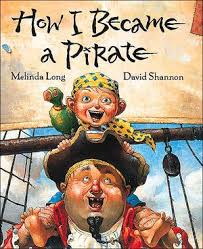
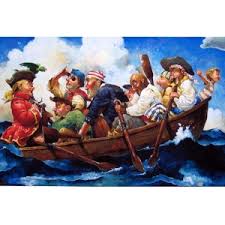
7.  For a spin on it, only assign books about PIRATE things, like E SHA for "How I Became a Pirate" and REF 973 with a book mark in a page about pirate ships, non-fiction books about Pirates and a FIC chapter book from the Magic Treehouse Series about Pirates.
8.  I JUST MAY DO THIS A FEW WEEKS IN A ROW IN ORDER TO HELP STUDENTS "LEARN THE LIBRARY"
   

The students enjoyed this game and it was fast and they learned alot.  (15 minutes)

Tuesday, September 18, 2012

TUESDAY: TEACH THE BOOK "THE MYSTERIOUS TADPOLE" BY STEVEN KELLOGG

The Mysterious Tadpole by Steven Kellogg - LESSON PLAN by http://thepicturebookteachersedition.blogspot.com/2012/09/the-mysterious-tadpole-by-steven-kellogg.html


BOOK REVIEW:  Uncle McAllister, he always sends Louis the best birthday presents, this year is no exception. Uncle McAllister sent, what everyone thought, was a tadpole to Louis for this years birthday. Louis named his tadpole Alphonse. Alphonse was no ordinary tadpole, he grew, and grew, and grew until he could no longer fit in Louis' apartment. Louis set out in search of help. He needed to get enough money to build Louis a pool. Louis asked the school librarian to help him, and boy did she! Wait till you see where they found the money to make Alphonse's new home!

This is such a fun book, it has been one of my favorites since my girls were babies...even as I worked on this review, both of my girls walked by, saw the book, and both said, "Oh, I love that book!"

I hope you can use the FREE classify and categorize activity I have created to go along with this book.

If you would like to make your own reading skill or strategy lesson with this book here is a list of ideas and questions that might be helpful.
Reading level: 3.2

Theme: friendship

Genre: Fiction

Suggested Vocabulary: Scotland, ordinary, donated, smuggled, retrieved, Loc Ness monster

Reading skills and strategies:
  • asking questions - {possible questions before} Why is the tadpole mysterious? {possible questions during} Why does Alphonse eat cheeseburgers? Why is Alphonse growing so fast? What are they going to do with Alphonse now that he is too big for the apartment? Why was the coach so mad? What is a Loc Ness monster? {possible questions after} What kind of bird was in the egg?
  • author's point of view - third person point of view
  • author's purpose - entertain {evidence} The tadpole grew very fast. Alphonse ate cheeseburgers. Alphonse found a treasure chest in the harbor. All of these things are silly, which makes an entertaining story.
  • beginning, middle, end - {most important event from beginning} Louis got a tadpole from his uncle for his birthday. {most important event from middle} Alphonse grew so fast that he needed a new home. {most important event from end} Alphonse found the treasure to help pay for his new home.
  • cause and effect - Why did Uncle McAllister send Louis a tadpole? because it was Louis' birthday. Why did the teacher ask Louis to stop bringing Alphonse to school? because she decided that he was no ordinary tadpole. Why did Louis smuggle Alphonse into the school? because he needed Alphonse to live in the school pool. Why was to coach upset and confused? because Alphonse was in the pool. Why did Miss. Seevers drop her purse and books into the pool? because she was so shocked to see Alphonse. Why did Miss. Seevers call Uncle McAllister? because she wanted to find out more about Alphonse. Why does Miss Seevers think Alphonse is a Loc Ness monster? because Alphonse is so big and he was found in the lake Loc Ness. Why does Alphonse need to find the treasure? because they needed the money to buy the parking lot to build Alphonse a pool. Why did Uncle McAllister come to visit Louis? because it was his birthday, again. Why does Louis' parents look so nervous at the end of the book? because they are afraid of what the bird might grow into.
  • characterization - describe Louis, describe Alphonse, describe Miss. Seevers {looks like, feelings, thoughts, character}
  • classify & categorize - birthday gifts that your parents would be happy you got and birthday gifts that your parents would not be happy you got.
  • compare & contrast - your pet to Alphonse
  • connections - {possible text-to-self connections} getting a pet for a gift.
  • drawing conclusions & inferencing - How do you think Louis' parents are feeling when the birthday egg cracks open? {text clues} the looks on their faces look like they are worried. Also the tadpole turned out not to be a tadpole but a very big Loc Ness monster. {my conclusion} I think Louis' parents are worried that the bird is going to turn into a very big raptor.
  • main idea & details - {main idea} {details}
  • plot - the turning point or climax in the story is when Alphonse gets the treasure chest.
  • predict - Do you think Alphonse is a tadpole? Do you think Alphonse will get sent to the zoo? Do you think Louis will get into trouble having Alphonse in the school pool? What do you think the swimmers and coach will do when they find Alphonse in the pool? How do you think Miss. Seevers will react when she seed Alphonse? What do you think Miss. Seevers' idea is? Will Alphonse find the treasure? What do you think Uncle McAllister will send Louis this year for his birthday. What kind of bird do you think Uncle McAllister sent?
  • problem & solution - {problem} Alphonse is getting so big he can't fit anywhere. {solution} Louis wants to buy the parking lot next door to build Alphonse a pool.
  • sequencing - Uncle McAllister sends Louis a birthday gift. Louis names his tadpole Alphonse. Louis takes Alphonse to school for show and tell. Alphonse starts outgrowing all his homes. The teacher tells Louis that Alphonse can't come to school anymore. Louis takes Alphonse to the school pool. The coach and swimmers see Alphonse and run away from the pool. Louis asks Miss. Seevers to help him. She tells Louis about a treasure chest that no one has found. Alphonse goes into the harbor and finds the treasure chest. Miss. Seevers and Louis have enough money to build Alphonse his pool. All the kids love to swim with Alphonse. It is Louis' birthday again and Uncle McAllister delivers his new present...an egg.
  • story elements - list title, author, character's, setting, beginning, middle, end, or problem & solution.
  • summarize - {someone}Louis {wanted} needed to buy the parking lot next door to build Alphonse a pool {but} but they didn't have enough money {so} so he asked Miss. Seevers for help. {then}Miss. Seevers told Louis of a treasure chest that Alphonse found. {finally} They finally had enough money to build Alphonse his pool.

Thursday, September 6, 2012

WEDNESDAY'S and THURSDAYS THEME (Sept 11TH) WEEK AT A GLANCE LIBRARY PLANS in Bullet Points... Easier for Me

For next week I have decided to look at my current lesson plans and create them into bullet points.  I've found that when I teach, I can't take a long paragraph and them teach from it.  If I have what I need to do in bullet points, it just makes so much more sense.  So I am going to take my Sept. 10- 14th lesson plans, copy them down here and bullet point them.  Hope it helps anyone using these plans!


Here is how it is going to look:


- - - - - - - - - - - - - - - - - - - - - - - - - - - - - - - - - - - - - - - - - - - - - - - - - - - - - - - - - - 
"BULLET POINTS WAY"

September Week #1 - Library Policies and Procedures

1.  Library Rules - 
     R - RESPECT OTHERS AND PROPERTY
     U - USE A SOFT or SILENT VOICE
     L - LISTEN TO OTHERS WITH RESPECT (teacher and peers)
     E - ENJOY reading and BEING IN THE LIBRARY.  
     S - SHELF BOOKS CORRECTLY - put on cart if you can't reshelf it.

     IF YOU NEED TO SAY SOMETHING, RAISE YOUR HAND.
     IF YOU NEED TO USE THE RESTROOM.....

2.  Who's been to the library?
      What did you notice? Quiet, helpers, tons of books, check out books, whispering...
      What else did you notice?

3.  NO checkout today.

4.  Fun things this year:
     book fairs
     read-a-thons
     book bucks
     book drive
     author visit
     book trade
     What would you like to do?

5.  Read:  "We Are In a Book" by Mo Willems 
      (show other books by him and stuffed puppets... Change voices for piggy and elephant.       Discuss with lots of laughter!)  


Other Resources:  Library Lion by Michelle Knudsen, Ill. by Kevin Hawkes or Lily's Purple Plastic Purse by Kevin Henkes; other books to read the 1st or 2nd week are "David Goes to School" by David Shannon, "One" by Kathryn Otoshi, "Max Goes to the Library", "Goldisocks and the 3 Libearians", "The Library Lady",...

6.  Art Activity:  Draw and color your favorite story, with the name of the story writeen under.

***Optional Activity:  Read one of the books above and discuss why we need rules.  Review rules and practice them each week until students get them down.


September Week #2  Circulation
  • Review  policies and procedures with thumbs up/thumbs down game or red light green light sticks.
  • Demonstrate correct check in /out methods, using shelf sticks and using library materials appropriately.
  • Entering the library and checking in books.
  • finding a place to sit
  • Distribution of shelf sticks by students themselves.
  • NO FIGHTING WITH STICKS or NO CHECK OUT.
  • Standing in line to check out books.
  • The librarian checks out books to students.
  • Read in a comfy place after check out silently. REMEMBER SILENT MEANS SILENT.
  • Bring a book if you don't want to check out a book.
  • PRACTICE ALL OF THIS 2-3 TIMES.
  • FOR YOUNGER STUDENTS IF THERE IS TIME:  REVIEW A SHORT BOOK ON SEPT. 11TH OR THE TITANIC WHICH IS NOT SCARY  TO THEM.
  • FOR OLDER STUDENTS IF THERE IS TIME:  Review a book about Sept. 11th or the Titanic, while students listen with respect


For older students (Grades 3 and up.)  
Title:  September 11th Remembered
Library Objective:  To remember those who lost their lives, their heroic acts and celebrate the love we feel for America.  Check out Education World for many great lesson plans, highlighted in a future post on Sept. 8th, 2012.

Resources:  Here is a great new book that commemorates the 10th year anniversary of the falling of the towers.
  • Reading level: Ages 6 and up
  • Hardcover: 64 pages (summarize and paraphrase)
 America Is Under Attack: September 11, 2001: The Day the Towers Fell (Actual Times)

Others:

September 11, 2001: Then and Now (True Books: American History)

The Little Chapel that Stood

September 11, 2001 (Turning Points in U.S. History)

Vocabulary:  heroism, patriotic, commemorate


Wednesday, August 8, 2012

WEDNESDAY's WEEKLY LIBRARY PLANS: DECEMBER

To see my library plans for the year and each month, click on the tabs below my header.  As you can tell, I'm slowly redoing my curriculum and continue to update and add to each month.  I'm currently working my way through the December curriculum.  What do you think?  What is it missing?  I'm up for any suggestions or comments!!!!!!!!

DECEMBER LESSONS:
BIOGRAPHIES  & AUTOBIOGRAPHIES
HAPPY HOLIDAYS
CHRISTMAS

*Author Spotlight:  Jan Brett, Jerry Pinkney


Week #1:  BIOGRAPHIES & AUTOBIOGRAPHIES 


Library Objective:  Students will describe a biography and identify the biography section.

Title:  “Susan B. Anthony” (You may do this lesson plan using any important or famous person you'd like.)


Resources:  Susan B. Anthony by Peter and Connie Roop; Chart or Bulletin Board Paper

Vocabulary:  Suffrage, Quaker, Women’s Rights Movement

Activity:  KWL Chart
Ask students:
What do you already know about Susan B. Anthony?
What do you want to know about Susan B. Anthony?
What are some things you would like to research?
How can we find information about Susan B. Anthony?

Read Susan B. Anthony by Peter and Connie Roop.
Listen for answers to their research questions.
Record the answers on the chart.

Closure:  Read the chart
Discuss biographies and the biography section of the library.
Send students to the biography section to browse and checkout books.

*(I'M STILL WORKING ON THE AUTOBIOGRAPHY PART OF THIS LESSON).

Week #2:  Author Study: Jan Brett. See this incredible web site:  http://www.janbrett.com/index.html  with many, many ideas for an author study of Jan Brett.

Jan Brett's Christmas Treasury: The Book  

Jan Brett's Christmas Treasury is a large and beautiful book. It measures just under 12" by 12" and is 256 pages long. As can be expected in a book by Brett, the illustrations are captivating. For the most part, they consist of large single or double page paintings, with wide frames. The frames themselves frequently include small scenes showing characters in activities that extend the story. The frames also serve to give the illusion of windows that allows readers a peak into another world. The unique artwork enables the artist to succeed in her goal of making readers believe "that the imaginary place I'm drawing really exists."

Jan Brett's Christmas Treasury: The Stories

Jan Brett's Christmas Treasury contains seven of her most popular stories, each of which was originally published as an individual picture book. All of the stories take place in winter. Four are Christmas stories. These include beautifully illustrated versions of "The Twelve Days of Christmas" and "The Night Before Christmas." While none of the stories touch on Christmas as a religious holiday, they do emphasize the Christmas spirit of generosity and sharing. Two of the stories both written and illustrated by Brett, "Trouble with Trolls" and "Christmas Trolls" feature Treva, a clever and kind little girl, who solves problems caused by the impish trolls who live in the woods. In "The Hat," Hedgie the hedgehog, who gets a woolen stocking caught on his head when it blows off of the clothesline, convinces all of the other animals that it's a hat and they need one, too. Other stories include "The Mitten," which is based on a Ukranian folktale, and "The Wild Christmas Reindeer."
Week #3:  Christmas and Happy Holidays
Read Aloud Book List: read Christmas classics and favorites this month
Christmas Trolls by Jan Brett
The Wild Christmas Reindeer by Jan Brett
Home for Christmas by Jan Brett
"Twas the Night Before Christmas" by Jan Brett
The Twelve Days of Christmas by Jan Brett

Here are as few other favorites:


Product Details

I Spy Christmas: A Book of Picture Riddles by Jean Marzollo 

and Walter Wick (Photographer) (Oct 1, 1992)


Product Details

Baby's Christmas (Golden Baby) by Esther Wilkin and Eloise Wilkin 

(Sep 11, 2012)


Product Details

The Christmas Story by Jane Werner Watson 

and Eloise Wilkin (Aug 1, 2000)


Product Details

What Is Christmas? by Michelle Medlock Adams 

and Amy Wummer (Sep 1, 2006)


Product Details

The Night Before Christmas by Clement C. Moore 

and Mary Engelbreit (Sep 21, 2004)


Product Details
The Polar Express by Van Allsburg


Jerry Pinkney's - "The Lion and the Mouse" - This is a wordless picture book that is a Caldecott winner.  The illustrations are gorgeous.  Let the students look at each page quietly and have them write something for each page to describe what is happening.  (Essentially they will write the story.) 


 The Lion and the Mouse 

 by Jerry Pinkney

Jerry Pinkney’s book is the perfect example of  pictorial storytelling. The children love the beautiful illustrations, and they engage in discussing the details on each page.
Click on lion for lesson plans on making inferences.
Click on mouse for a mini-book template created by Laura Moore.
ANOTHER LESSON PLAN, ESPECIALLY APPROPRIATE FOR THE CHRISTMAS SEASON...
This lesson introduces the idea of giving back. Students hear an oral retelling of "The Lion and the Mouse" and relate the ability of the mouse to help the lion with the empowerment of children to make a difference.

Duration:

One Thirty-Minute Class Period

Objectives:

The learner will:
  • tell an oral story (may use a storybook that doesn't have words).
  • compare the lion/mouse relationship with an adult/child relationship.
  • brainstorm the time, talent, and treasure children may have that can make a difference in the world.
  • describe the concepts of "giving back" and "paying it forward."

Materials:

Copy of the fable The Lion and the Mouse (see Bibliographic References).

Synopsis:

In the story "The Lion and the Mouse," the mouse is captured by a lion. The mouse convinces the lion to let him go so one day the mouse can help the lion. The lion feels kind and decides to let the mouse go. The mouse promises to repay the lion one day. The lion laughed, thinking, "what could a mouse do for me." Later, the lion is caught in a trap. When the mouse hears the lion roaring, he chews through the ropes to set the lion free. The lion learns that size and power are not the only strengths one may have.

Instructional Procedure(s):

Anticipatory Set:
Ask the students, "Do you think you can help someone who is bigger, stronger, or older than you?"  Listen to their ideas. Write some of their examples and sort their ideas into the following categories: talents, time, and treasure. For example, someone may share their talent for social media; share their time with a sick person; share their treasure in the form of a good book or food for lunch. Tell them the fable, The Lion and the Mouse, tells how someone very small helped someone very big and powerful.
  • Ask them to raise their hands if they have ever told or been told a story. Tell the students that people have been telling stories aloud for thousands of years, long before there were written books. Family and friends enjoyed hearing stories because they were interesting and because stories taught them about the world. 
  • Ask the students how books and stories make our lives better. Ask what they think it would be like if they didn't have easy access to books that tell stories or give them information.
  • Explain that you will be telling them a story rather than reading aloud. Students will use their imagination and picture the story in their heads if you are telling it without the picture book. If you are using the picture book that has no text, you may ask the students to participate in the storytelling as much as possible.
  • Tell the story to the class using engaging language and expressive voices.
  • Discuss the story
    What did the lion do for the mouse? Why?What did the mouse do for the lion? Why?Do you think the mouse would have helped the lion if the lion had not freed him? Why or why not?
    What do you think it means "to give back"?

    How is this a story about being good citizens?
  • Tell the students to compare and contrast a mouse and a lion (you may use a Venn diagram). Then ask the students how the mouse and lion are similar to a child and an adult. Ask, "what can a child do to help an adult?"
  • Discuss things children can do that are good for the community. Brainstorm the time, talent, and treasure children may have that can make a difference in the world.
  • Describe the concepts of "giving back" and "paying it forward." When someone does something nice for you, you can pass it on by doing something nice for someone else. Ask. "How does that make the wholecommunity better?"
  • Challenge the students to look for opportunities to help when it is not expected of them. Tell them to bring stories of helping in this way back to the classroom over the next couple weeks. Write a description of what they do on an index card and post the cards on a bulletin board.

Assessment:


Curriculum Connection:

Interdisciplinary: Have the children brainstorm animals. Write their suggestions in two side-by-side lists forming random pairs. Have the children suggest how the animal pairs could help each other. Have the children draw a picture of two animals helping each other. Label each picture with their description of "helping."
Science: Learn about the food chain. What is a possible food chain that includes a lion? What is a possible food chain for a mouse?

Cross-Curriculum Extensions:

Student Voice: Encourage students to be creative and find opportunities to give back that utilize their talents and interests.

Bibliographical References:

  • Pinkney, Jerry. The Lion and the Mouse. Little, Brown Books for Young Readers, 2009. ISBN-13: 978-0316013567

LinkWithin

Related Posts Plugin for WordPress, Blogger...